
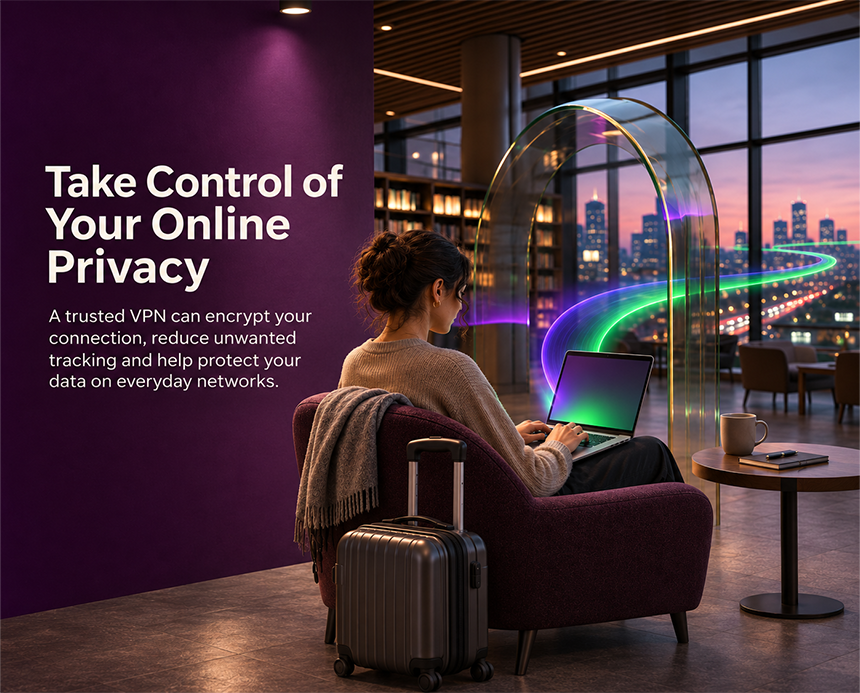



We leave behind bits of information with each use of the Internet. Websites may collect browsing data, advertisers track interests, apps request permissions and public Wi-Fi networks introduce additional security risks. A lot of it is done in the background, so its easy to overlook how much of our daily lives are now dependent on digital platforms. Internet privacy is no longer just a cybersecurity issue as activities become more and more interconnected, it is a concern for everyone. Whether its a student, remote worker, traveler, or just someone using the internet, everyone is becoming more aware about personal information protection.
This newfound consciousness has put VPNs under the microscope. One of the services that are being highlighted is Proton VPN, which is a privacy-focused service that aims to improve the security and privacy of internet connections. So how does a VPN function and why have services like Proton VPN become important to contemporary internet users?
Why is online privacy suddenly so vital to you?
Communication, shopping, banking and entertainment via the internet is highly convenient. This ease of use comes with the trade-off of giving up personal information to various websites, applications and online services, though. Interest in and habit and preference can be deduced from browsing. The information from the various locations, the characteristics of the devices as well as the online identifiers can also be part of the digital profile that accompanies an individual.
Some data collection methods are not bad; however, users are informed about the data they are giving away and who might be able to access it. Privacy is especially crucial when accessing, working with, or logging in to sensitive accounts and networks that you are not familiar with.
The problem is that its easy to believe that just because they are on a password protected device or a known website, their web connection is therefore private. Online privacy is actually a multi-layered concept.
What Is a VPN and How Does It Work?

Virtual private networks (VPNs) use encryption to establish a secure connection between users devices and a VPN server. This protected tunnel has the effect of routing internet traffic through it, rather than the usual path. This has two significant advantages. One of the major advantages of using encryption is that it ensures that no other party on the network can easily read the data that is sent between the device and the VPN server. Secondly, the IP address of the VPN server is displayed on the website, instead of the users original public IP address.
This is especially helpful when accessing the Internet at public Wi-Fi hot spots such as airports, hotels, cafés and other public places. It can also help minimize the amount of browsing information that the internet service provider is able to see. But a VPN isnot a total privacy measure. It doesnot block tracking via cookies, fingerprinting on browsers, or social media accounts or information shared voluntarily on the internet. Users require effective security practices and good passwords, and an understanding of the sites they visit.
Getting to Know Proton VPN
Proton VPN is a virtual private network (VPN) service created by the same team that has developed Proton Mail. The overarching mission is focused on ensuring that online privacy and security is accessible. One of its distinguishing features is its Swiss base that positions the company within the Swiss legal system. The service also has a no-logs policy, in that it says it does not log users Internet activity that could show their browsing history.
Proton VPN provides apps for the main platforms such as Windows, macOS, Linux, Android and iOS. This enables users to secure their Internet connections on various devices. The service is not limited to connection security, but it also has other features to offer increased control over privacy, the protection of networks, and internet access.
The Importance of a No-Logs Policy

One of the most essential questions to ask when selecting a VPN is what with the information flowing through the service.
The VPN provider is an essential component of the internet connection since the traffic is routed through it. This is especially important regarding the providers use of privacy policies. No-logs policy guarantees the provider will not keep logs of the users online activity. According to Proton VPN, it does not store visited sites, duration and IP addresses of the users. It has also undergone an independent audit of its policy.
This transparency is crucial because where possible, privacy promises need to be backed by clear policies and external review. However, customers need to be aware that a no-logs policy does not ensure complete anonymity for all Internet traffic. Websites can still identify users who are logged in, gather information via browser technology, and ask for personal information.
What Makes Proton VPN Different?
Proton VPN doesnot just mask your IP address, there are several features that go beyond that. Secure Core is one such example, where traffic is directed to a special server, and then through to the chosen VPN server. This extra layer of routing will add extra protection against certain network attacks. Another feature is NetShield, a DNS filtering tool as available with eligible paid plans. It may also block ads and trackers, and will block connections with malicious websites, which can help to minimize unwanted ads and some security risks online.
There\\\'s also a kill switch for the service. If the VPN connection unexpectedly drops, this feature can block internet traffic to help prevent the device from exposing its regular IP address. If you are facing network restrictions, Proton VPN has features like Stealth and alternative routing. They are intended to create a link in situations where the VPN traffic could be limited or blocked. Availability of individual features may be dependent on plan and device.
Would a free VPN be sufficient?

There is a lot of hesitation among many to invest in a VPN without understanding the necessity of one. This is the reason why there is a tremendous interest in free VPN services. Proton VPN has a free service that has no data caps, no banners and a no-logs policy. It offers some of the key VPN privacy features that make it an alternative for those who would like to use only basic VPN protection without paying the subscription fee.
But there is no exact match between the free and paid plans. The free plan comes with restrictions on the number of devices per connection and the number of servers you can access, and paid plans offer access to more features, more servers and more capabilities. If you occasionally use public Wi-Fi or you want an added degree of connection privacy, a free plan might be enough. Those requiring more server access, security features or device connections might prefer a paid plan. Which is the best option depends on the individual needs and not just on the length of the feature list.
The use of public wi-fi and the need for better protection
Free WiFi is commonplace these days. Travelers meet at airports, professionals use shared networks in cafés, while students share networks on campus.
While these networks are convenient, not all public networks are equal when it comes to security. Threats to the network can be present if the network is not secured or set up correctly.
A VPN can provide protection by encrypting Internet traffic between the device and the VPN server. That makes it more difficult for other users on the network to view that traffic. However, a VPN should not be a substitute for taking basic precautions. Users should be wary of links that are suspicious, keep devices up-to-date, use secure websites and multi-factor authentication when available.
Using VPN makes you completely anonymous?

Being misinformed about VPN technology, one thing is that it renders the users invisible on the web. This is not completely the case.
VPN can help disguise a users IP address that is visible to the sites they visit and can help secure communications between the users device and the VPN server. It can, however, remove all digital footprints but not all. Even with the account logins and other technologies used to track a visitor to a website, it is possible to identify visitors. Malware and phishing attacks, as well as unsafe downloads, also continue to be a possibility.
A VPN should be considered as a component of a larger digital privacy plan, therefore, it is more appropriate to view it as one tool among many. It is only as effective when used in conjunction with other security precautions.
To embed privacy into everyday use of the internet
You donot need to be technically savvy to protect online privacy. There are small steps that can make a difference such as checking app permissions, using strong passwords, selecting secure WiFi networks, and ensuring software is up to date to name a few. These practices can be enhanced by using a VPN, which provides an extra layer of security and privacy for the users IP address. The emergence of Proton VPN and other services shows just how accessible and user-friendly privacy-centric technology can be for common internet users.
With more activities going online, it will become more important for people to understand how their personal information is moving online. Its not that we are trying to steer clear of technology, but rather to use technology with more awareness and control. In the end, making smart decisions begins with a more private internet experience. Online privacy is no longer a luxury, whether a person is working from home or from a different location, travelling frequently or simply enjoying a good old-fashioned browse. It has become a crucial component of daily digital life.