
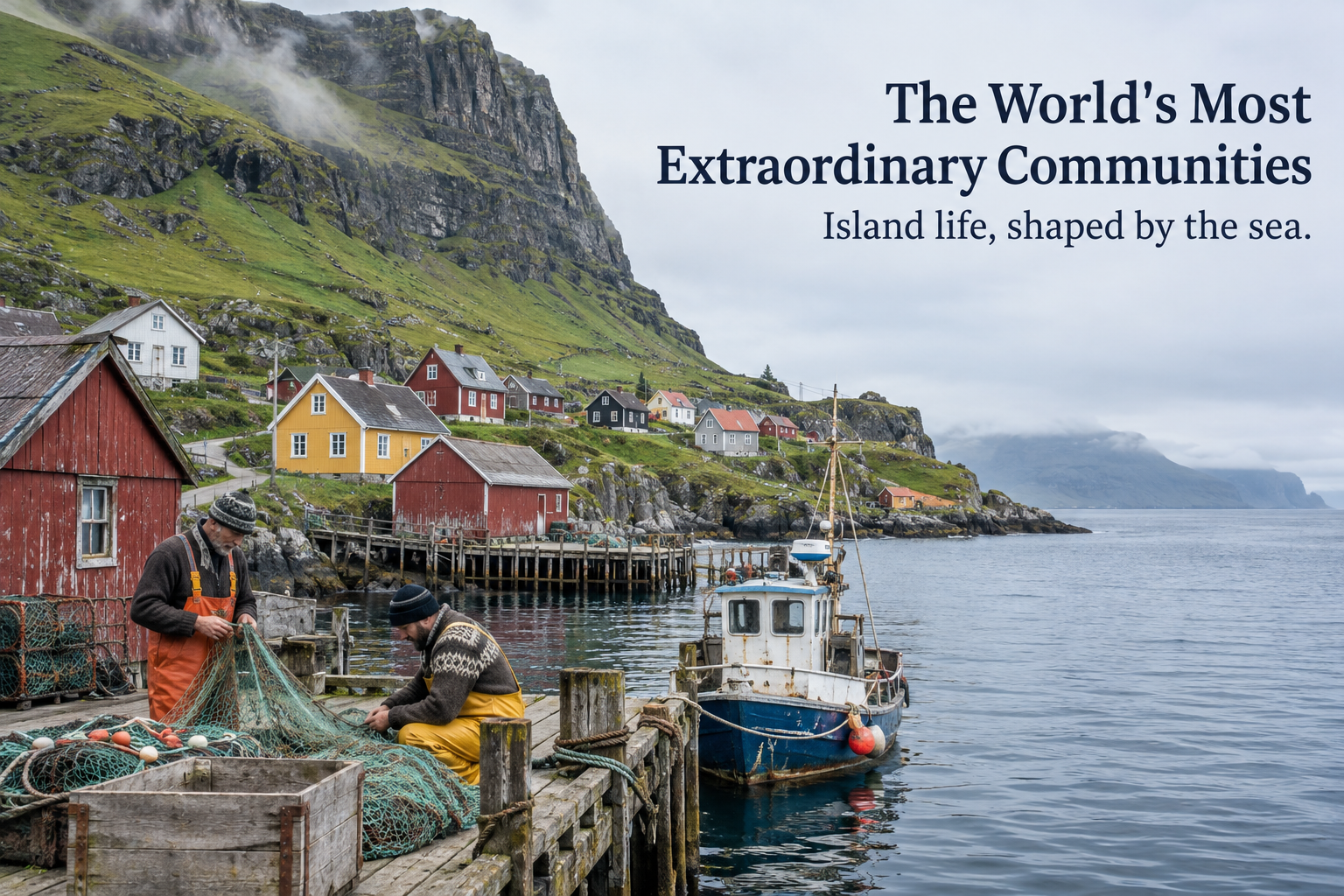



There are thousands of islands in the world\'s oceans, and people have adapted very differently to the different islands. Some are designed to accommodate fishing and sea life, others have evolved in remote environments, with different climate and scarce resources. These communities provide a fascinating insight into how communities in water-filled settings create homes and sustain traditions and connections.
Living on an island can be a beautiful place with lovely beaches and tranquil vacations, but everyday life on the island can be quite different from the life of a short-term visitor. Boats or small aircraft and/or limited local infrastructure may be required for transport, food supplies, education, healthcare. Island communities also tend to have strong cultural identities, influenced by their geography and history. The places are not only breathtaking for the visitors, but they are also a great place to be on a trip. It offers a chance to gain insights into various lifestyles, learn about local customs and discover communities that have adapted to their natural environment.
Why Island Communities are so unique

The importance of geography in the life of the Islands is significant. Fishing, farming, and tourism and shipping are important livelihoods in many island communities. Their isolation from larger urban centers can affect their access to routine services and the sea is frequently the focus of their economy and identity.
In certain areas traditional practices have been continued for centuries. The relationship of the residents to their environment is reflected in local architecture, food, festivals and crafts. Modern tourism, and shifting economic opportunities, have added new influences in others. Not all the most remote communities in the islands are the most interesting. These charms are often related to the way that the residents have adapted to their surroundings and still have a sense of belonging. Naturally, these are just a few of the extraordinary island communities around the world; there are so many more.
1. Ganvie, Benin: A Village Built on Water
Ganvie is one of the most amazing stilt villages in Africa and is situated on Lake Nokoué in southern Benin. It has houses, markets and communal spaces above water creating a settlement that is dependent on the use of boats. The village has a history that is connected to Tofinu people, who had settled in the village centuries ago. The elevation of its location helped to provide protection when it was a time when slave raiders were threatening communities in the area.
Fishing is still an integral part of the life of the local community. Wooden boats are used for residents to move from house to house, to markets and adjoining settlements, and floating trading areas facilitate local economic activities. Guests can take a boat to explore the village and to learn about the history, architecture and fishing traditions. A visit to Ganvie should do no harm to local businesses or guides, and should respect the fact that Ganvie is not a mere \'trip destination\', but a community in living memory.
2. The Uros Islands, Peru: life on floating islands
The Uros are famous for their amazing floating islands crafted from totora reeds in Lake Titicaca, near the city of Puno in Peru. These islands are formed by piling reeds which encircle the lake. The material is also utilized in constructions of homes, boats and daily structures. The residents have to add new reeds to the islands on a regular basis, as the reeds slowly disintegrate. The life of the communities has been closely linked to the lake with the people depending upon fishing and local trade and tourism. Visitors can get to know how the islands are built and the cultural significance of traditional reed crafts. The Uros Islands are a great place to learn about the adaptations of a people to a unique environment. It also provides an opportunity to learn about the significance of sustaining native traditions while also helping the local communities.
3. Living Between The North Atlantic and Rugged Cliffs, The Faroe Islands
The Faroe Islands lie in the North Atlantic, sandwiched between Iceland and Norway and are characterized by dramatic landscapes, powerful winds and a long maritime history. There are in many places steep mountains, green valleys and coastal cliffs surrounding the small villages. The traditional houses with grass roofing are a unique feature of the landscape, which is a reflection of the adaptation of the architecture to the climatic conditions in the area. Historically fishing has been a crucial part of the islands\' economy and sheep farming an integral part of the rural economy. Other factors that foster a sense of community identity include the Faroese language, traditional music, and community celebrations. They can enjoy the picturesque villages like Gásadalur and Gjógv, hike along scenic trails and taste the local cuisine. The islands are especially fascinating to nature lovers, photographers, and those who prefer more relaxed activities.
4. The Fishing Villages of the Arctic, in Lofoten, Norway
The Lofoten Islands in northern Norway are renowned for their rugged mountains, secluded fishing towns and spectacular seascape. Fishing has been an integral part of life in the region for generations. The traditional fishing cabins of red color, called rorbuer, were originally built for seasonal fishermen. Many of these have been converted since that time into visitor lodging, enabling visitors to enjoy a slice of the maritime heritage in the area. Some villages like Reine and Henningsvær have great views of the mountains and the water. The visitors can visit fishing museums, local galleries and small harbours and learn the significance of the fishing industry. Visitors can also spot the northern lights or enjoy the midnight sun, depending on the season. Although popular amongst visitors, Lofoten is still a working area, where local communities still rely on the sea for their livelihood.
5. Hydra is an island in Greece that is home to no cars or bikes
11.9km of beachfront, a mix of 400,000+ inhabitants and a thousand-year-old history, and a way of life as distinct as any other on the islands of Greece - that\'s Hydra. The harbours of its historic town, the narrow streets and the stone houses have made it a picturesque sight. The main settlement on the island is special in that it doesn\'t have any cars or motor traffic. Walking, boats and working animals are still key means of transport. The architecture of Hydra is inspired by its maritime past, historic mansions and traditional buildings all overlooking the harbour. The island nowadays attracts those who are interested in art, history, as well as in swimming and a calmer life. It has a compact area, convenient to explore on foot, although a little stepside and uneven on the street. How a community can be both unique and welcoming to contemporary tourism is demonstrated in Hydra.
How are the lives of people on islands different?

The advantages and disadvantages of being an island dweller aren\'t always apparent to tourists. Water around the property may be a source of food, transport and economic activity, but can also limit certain aspects. Communities rely on ferries and boats to make regular travel within the community. Schedules may be impacted by the weather, and travel times are not as predictable as in large cities. Fishing, farming and local markets are key for many island communities (food and local resources). Supplies may have to be brought in from other parts of the mainland if the islands are remote.
Culture and Community: Smaller populations can result in close social networks. Cultural identity can be maintained with the help of festivals, traditional crafts and traditional celebrations.
Tourism and Employment: Tourism can create employment and business opportunities but can also put pressure on the housing, infrastructure and natural resources. Good visitors\' behavior helps to keep the balance healthy.
Creating a tour of an island community
Preparing for a trip to an island community takes a little more effort than to go to a big city. The travel routes, climatic conditions, and local areas may affect the whole experience. Bookers should make ferry/boat arrangements before settling into their rooms, especially to smaller islands. Transportation can be limited at some destinations and weather conditions can cause delays or even cancel transportations. Local customs should also be understood and respected and residents\' privacy respected. Visitors must not enter private spaces without permission, and must follow local guidance and support independent businesses, wherever possible. Tourism can be beneficial to the local economy if the property is locally owned, community guides are employed and regional products bought.
The Future of Island Communities

Several issues are impacting communities on the islands such as sea level rise, coastal erosion, and shifting climate conditions and stress on natural resources. These can impact housing, fishing, agriculture and critical infrastructure. Tourism also offers extra opportunities, but needs to be managed carefully. Seasonal crowding can be an issue on popular islands, and smaller communities can find it difficult to provide affordable housing and services. There is a growing number of destinations looking to sustainable tourism practices, renewable energy and improved resource management, in order to safeguard their environment and help support their local livelihoods. These challenges are particularly important for travellers to be aware of when visiting an island. It invites visitors to see beyond a breathtaking view and celebrate the communities that make these places special.
The soft side of traveling to the islands
The most amazing communities of the world demonstrate that the life of an island is not just about beaches and beautiful coastlines. Whether it\'s the floating settlements of Benin, the fishing villages of Norway or the traditional streets of Greece, one can see a number of relationships between people and their environment. There are a number of reasons why these visits are beneficial, including gaining knowledge of local history, visiting unique sites and learning about the life of people living in water-rich communities. Island communities offer a unique and enriching experience for those looking to explore beyond the typical tourist destinations, offering a glimpse into the human experience. The people, traditions and day-to-day experiences on each island are what make them most interesting.